Batwara 1947 Movie Review: Sunny Deol and Shabana Azmi Shine in a Powerful Story of Humanity
Rating: ★★★¾ (3.75/5)
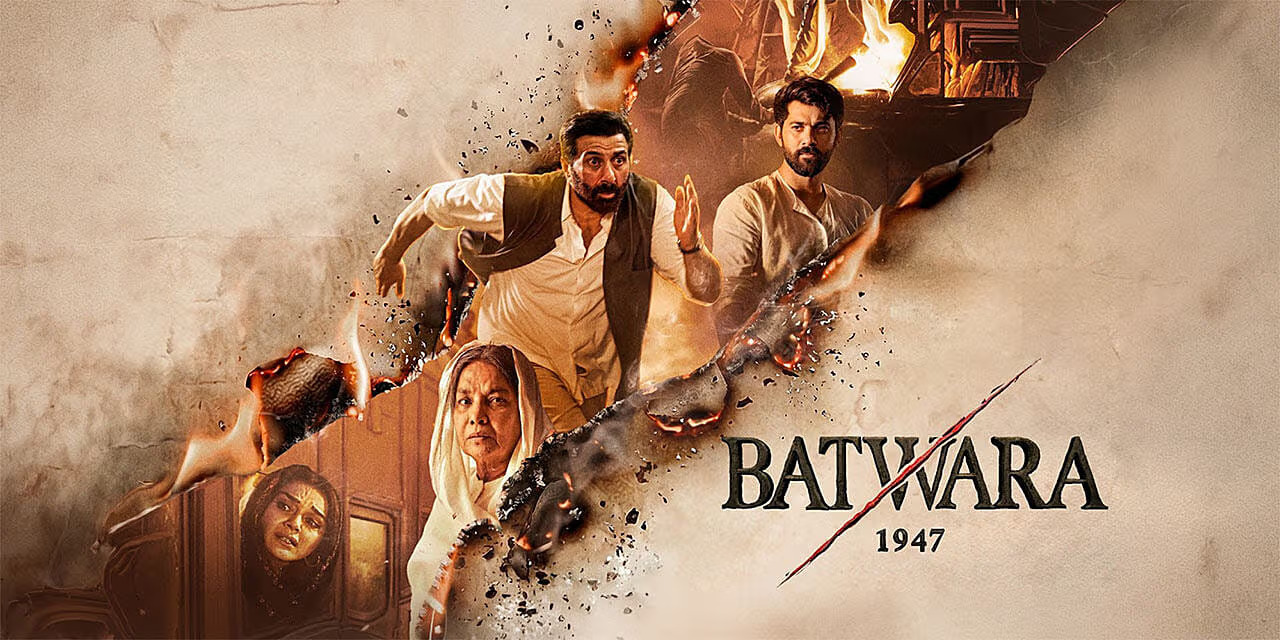
Rajkumar Santoshi and Sunny Deol reunite after decades, and Batwara 1947 proves to be a reunion worth watching. Set against the backdrop of the Partition of India, the film goes beyond the familiar Hindu-Muslim conflict narrative to tell a deeply emotional story about humanity, compassion and the consequences of hatred.
Based on Asghar Wajahat's acclaimed play Jis Lahore Nai Vekhya, O Jamya E Nai, the film revisits one of the darkest chapters of the subcontinent's history through the lives of people caught in the violence and upheaval of 1947.
What makes Batwara 1947 stand out is its combination of strong emotions, powerful performances and a message that remains deeply relevant. It is not a perfect film, with the first half taking some time to settle into the narrative, but the second half delivers several sequences that leave a lasting impact.
Story: Partition Through the Lens of Humanity
Batwara 1947 is set in Lahore during the Partition and follows characters whose lives are dramatically altered by the violence surrounding them. Rather than simply focusing on the political circumstances of Partition, the film examines how ordinary people were forced to confront fear, displacement, hatred and loss.
The film's central idea is clear: humanity must rise above religious hatred.
The screenplay takes its time establishing the characters and the circumstances in the first half. While this makes the opening portions somewhat slow, the groundwork becomes important as the story progresses.
The second half is where Batwara 1947 truly finds its rhythm. The emotions become stronger, the conflicts intensify and several sequences carry the unmistakable impact associated with Rajkumar Santoshi's filmmaking.
Rajkumar Santoshi Brings His Signature Style
Rajkumar Santoshi has handled the subject with conviction. The recreated Lahore of 1947 looks convincing, while the production design and atmosphere effectively capture the uncertainty, fear and turbulence of the era.
The director doesn't shy away from depicting violence and aggression. Street fights, confrontations and fiery dialogues occasionally carry the familiar Sunny Deol flavour, but Santoshi ensures that these elements remain connected to the film's larger emotional purpose.
Several sequences in the second half stand out, particularly the mob attack involving Shabana Azmi's character, the confrontation that follows, Sunny Deol's powerful police-station sequence and the finale.
The climax, in particular, is likely to generate conversations among audiences because of the questions it raises about communal hatred and humanity.
Sunny Deol Delivers a Different Performance
Sunny Deol is excellent.
Unlike many of his iconic roles that are driven by patriotism, revenge or larger-than-life aggression, Batwara 1947 gives him an opportunity to explore a more restrained character.
The actor brings vulnerability and authority to the role while maintaining the intensity that audiences associate with him. Even when the character remains quiet, Deol manages to communicate the weight of the situation through his expressions and presence.
His chemistry with the film's emotional core works particularly well, making this one of his more interesting performances in recent years.
Shabana Azmi Is Exceptional
Shabana Azmi delivers one of the film's strongest performances. She brings tremendous dignity and emotional depth to her character, particularly during the film's more difficult sequences.
Her portrayal adds considerable weight to the story and prevents the narrative from becoming merely a spectacle of Partition-era violence.
Azmi's performance is subtle yet powerful, and several of her scenes are among the most emotionally affecting moments in the film.
Preity Zinta Makes a Welcome Return
It is genuinely good to see Preity Zinta back on the big screen.
The actress makes the most of her role and delivers a confident performance. Her presence adds another emotional layer to the narrative, and she fits comfortably into Santoshi's world.
Abhimanyu Singh is dependable as always, while Karan Deol shows potential but still needs greater polish as an actor. Ali Fazal has his moments, although his character feels underwritten and could have benefited from greater development.
Music and Technical Aspects
With a story this intense, there isn't much room for conventional song-and-dance sequences, and the film wisely keeps the music integrated into the narrative.
The standout track is "Kahaan Chale Gaye Ho Ram", which arrives at an important point and effectively builds towards the pre-climax and finale.
The production design and recreation of Lahore deserve appreciation. The period setting feels authentic enough to immerse the audience in the world of 1947.
What Works and What Doesn't
The biggest strength of Batwara 1947 is its emotional core. The performances, particularly those of Sunny Deol and Shabana Azmi, elevate the material considerably.
The film also deserves credit for approaching Partition from a perspective that ultimately places humanity above religious divisions.
However, the first half could have been tighter. The film takes considerable time to establish its premise, and some supporting characters and subplots don't receive enough development.
The narrative occasionally leans heavily into familiar mass-film territory, which can feel slightly at odds with the otherwise serious subject.
Fortunately, the second half largely makes up for these shortcomings.
Final Verdict
Batwara 1947 is a sincere and emotionally charged take on Partition that rises above the familiar narrative of Hindu-Muslim conflict to deliver a message about humanity.
Rajkumar Santoshi and Sunny Deol's reunion works because the film combines their strengths with a story that gives both the actor and director something different to explore.
Sunny Deol delivers a restrained yet powerful performance, Shabana Azmi is exceptional, and Preity Zinta's return is a welcome one. The film takes time to find its footing, but once it does, the second half delivers several impactful sequences and a finale that stays with you.
It may not be flawless, but Batwara 1947 has the emotions, performances and, most importantly, the message to connect with audiences.
Verdict: 3.75/5
A powerful Partition drama driven by strong performances, intense emotions and a timely message about choosing humanity over hatred.