Drishyam The Conclusion Review: Ajay Devgn Delivers A Gripping Finale That Lives Up To The Legacy
Rating: ⭐⭐⭐⭐½ (4.5/5)
There are very few Hindi film franchises where audiences walk into the theatre carrying such enormous expectations. Drishyam is one of them. After building an audience around Vijay Salgaonkar's extraordinary ability to stay one step ahead, Drishyam The Conclusion arrives with the difficult task of bringing the story to its final chapter without diluting what made the franchise special.
The good news is that Drishyam The Conclusion largely succeeds in doing exactly that.
Director Abhishek Pathak understands that the third chapter cannot simply repeat the formula of the previous films. Instead, the film expands the conflict, raises the stakes and introduces a new threat in the form of Jaideep Ahlawat's Rajveer Singh Tomar, while keeping Vijay and his family at the emotional centre of the story. The screenplay takes its time establishing the new situation before steadily tightening the screws.
The result is a thriller that is driven less by spectacle and more by character, tension, investigation and the constant fear that Vijay's carefully constructed world could finally collapse.
Ajay Devgn Owns Vijay Salgaonkar
At the centre of the entire film is, once again, Ajay Devgn as Vijay Salgaonkar.
This character works because Devgn never plays Vijay as a conventional larger-than-life hero. There is restraint in his performance, and that restraint becomes one of the film's biggest strengths. Vijay knows that one wrong move can destroy everything he has protected, and Devgn communicates that pressure through his eyes, body language and silences as much as through dialogue.
The film gives him several opportunities to dominate the screen, but the most effective moments come when Vijay is placed opposite someone capable of matching his intensity.
That brings us to the biggest performance and dramatic highlight of the film.
Ajay Devgn And Jaideep Ahlawat Make The First Half Crackle
Jaideep Ahlawat is an excellent addition to the Drishyam universe.
As Rajveer Singh Tomar, he brings a completely different energy to the film. His character isn't simply there to move the investigation forward; he becomes a genuine threat to Vijay. The tension between the two characters gives the first half its strongest dramatic charge.
The confrontation between Devgn and Ahlawat is among the film's most effective stretches. Neither actor needs to overplay the scene. Their performances work through controlled aggression, observation and the feeling that both characters are constantly trying to understand the other.
This is precisely where the film finds its rhythm.
The audience knows Vijay's history. We know what he is capable of. But for the first time, there is an opponent who feels capable of pushing him into genuinely uncomfortable territory.
That makes their face-off one of the major reasons to experience the film on the big screen.
Abhishek Pathak Doesn't Simply Repeat The Formula
One of the biggest dangers with a franchise like Drishyam is repetition.
The earlier films established a very specific storytelling template, and simply recreating those beats would have made the third chapter feel unnecessary. Pathak and the writing team instead attempt to move the characters into a different phase of the story.
The screenplay keeps the central mystery alive while simultaneously expanding the emotional stakes around Vijay and his family. The film understands that the audience isn't only interested in knowing whether Vijay can escape again; they are invested in what this constant battle is doing to the family and whether his carefully constructed protection can survive one final confrontation.
This gives the film a stronger emotional foundation than a straightforward cat-and-mouse thriller.
The writing and direction emerge as two of the film's key strengths, with the story steadily building towards the confrontation that the franchise has been preparing for. Taran Adarsh also highlighted the writing and direction as major strengths, noting that the film moves the story forward rather than simply recycling the established formula.
The Courtroom Sequences Add Another Layer
The courtroom portions are another major highlight.
These sequences bring a different texture to the film and allow the characters to fight their battles through words, evidence and strategy rather than physical action. The presence of Prakash Raj adds considerable weight to these portions, while his screen presence works particularly well opposite Devgn.
The film uses these sequences to increase the pressure on Vijay rather than simply treating them as conventional courtroom drama.
There is an underlying question throughout: How long can Vijay continue to stay ahead?
That question keeps the audience invested.
Tabu Remains A Powerful Presence
Tabu returns as Meera Deshmukh with considerably more emotional baggage this time around.
Her character carries anger, loss and a deep desire for closure, and Tabu handles those emotions with the kind of control that has become synonymous with her work.
She doesn't need excessive dialogue to establish Meera's emotional state. Her presence itself carries the weight of everything that has happened before.
The Devgn-Tabu dynamic continues to be one of the franchise's strongest elements, particularly because neither character is written in simplistic black-and-white terms.
Prakash Raj, Shriya Saran And The Supporting Cast
Prakash Raj makes a strong impression and brings authority to the proceedings whenever he appears.
Shriya Saran is also in fine form, particularly in the more emotionally charged portions involving the Salgaonkar family. Rajat Kapoor brings dignity to his part, while Kamlesh Sawant adds further weight to the supporting cast.
Ishita Dutta and Mrunal Jadhav are adequate in their respective roles.
The ensemble works because the film never allows the supporting characters to completely overshadow its central conflict. Everything eventually comes back to Vijay and the danger surrounding his family.
The Climax Is Where Drishyam The Conclusion Delivers
And then comes the most important question:
Does the finale work?
Yes.
The final act is where the film justifies its existence as the concluding chapter.
The last stretch carries the tension that audiences expect from a Drishyam film, but more importantly, it provides a sense of payoff. The narrative has spent considerable time establishing the threat, developing the investigation and placing Vijay under pressure, and the climax finally brings those threads together.
The final 30 minutes are particularly gripping, with the tension escalating as the film moves towards its ultimate resolution. Pinkvilla similarly singled out the finale as one of the film's major strengths, describing the closing stretch as the film's key payoff.
What works best is that the climax doesn't feel like an obligatory extension of the franchise. It feels designed to close the Vijay Salgaonkar story.
And for a franchise that has always depended on its ability to make the audience think one step ahead, that is exactly what the finale needed to accomplish.
Background Score Adds To The Tension
There isn't an overwhelming dependence on songs, and that works in the film's favour.
The narrative is built around suspense and dramatic progression, so the background score becomes much more important. It adds intensity during the investigative and confrontation sequences and helps maintain the sense of danger surrounding Vijay.
The score works as a supporting element rather than overpowering the screenplay, which is exactly what this kind of thriller requires.
The One Noticeable Weakness
If there is one area where the film could have been tighter, it is the pacing in parts of the first half.
The film takes some time to establish the new conflict and get all its pieces into position. For viewers expecting immediate thrills, the opening stretch may feel slightly measured.
However, once the central confrontation gains momentum, the film becomes increasingly engaging. The second half compensates for the slower build-up, and the final act delivers the payoff that the setup demands.
Verdict
Drishyam The Conclusion is a worthy final chapter to the Vijay Salgaonkar saga.
It works because it understands what audiences have invested in over the course of the franchise. This isn't merely about another mystery or another escape. It is about the final battle between a man who has spent years protecting his family and those determined to finally uncover the truth.
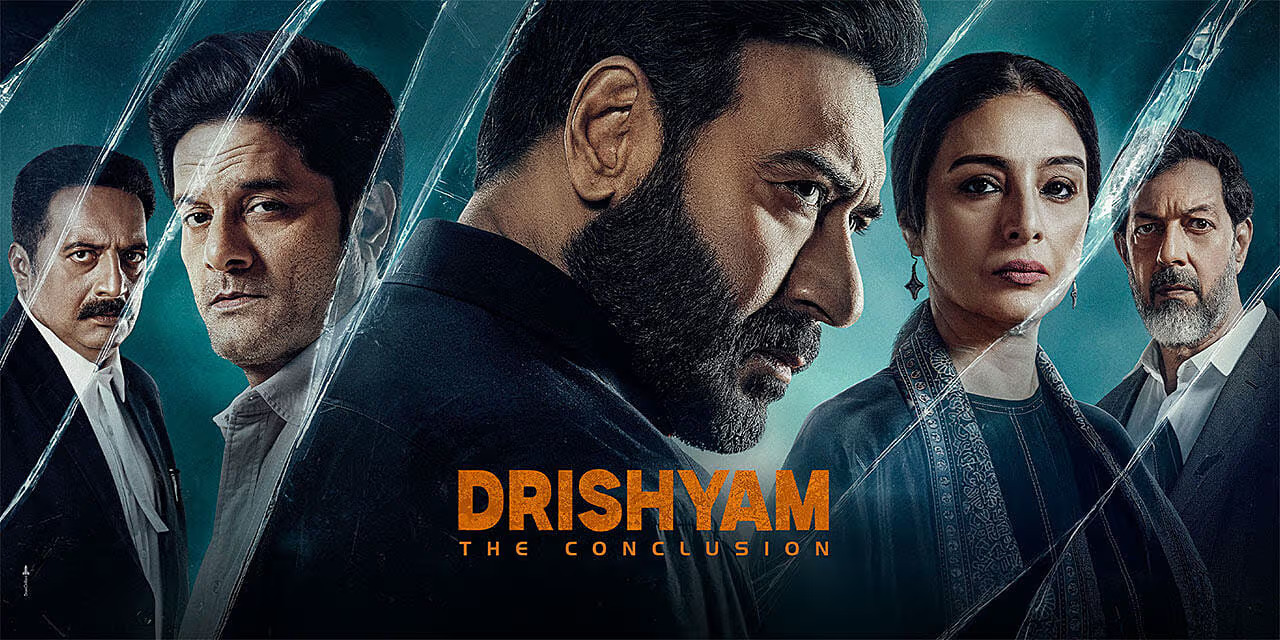
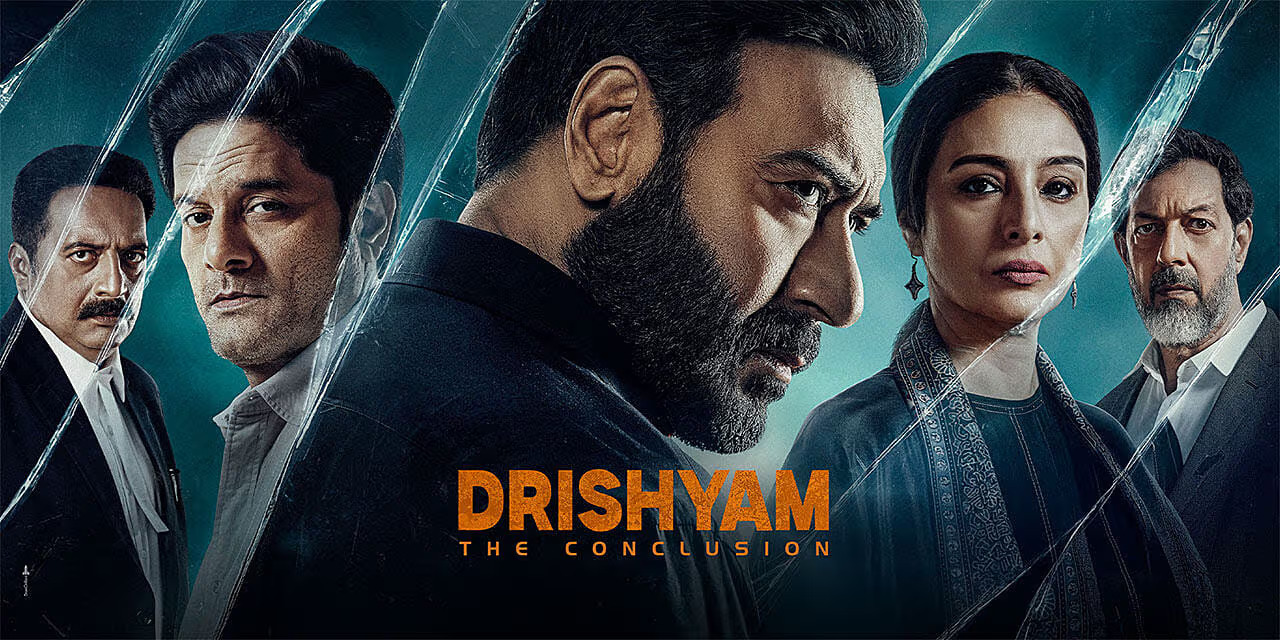
Ajay Devgn is excellent as Vijay Salgaonkar, carrying the film with the restraint and intensity that the character demands. Jaideep Ahlawat is a terrific addition, creating the kind of opponent who makes Vijay's final challenge feel genuinely dangerous. Tabu remains formidable, while Prakash Raj adds considerable authority to the proceedings.
Most importantly, Abhishek Pathak delivers on the climax.
The film may take a little time to settle into its rhythm, but once it gets going, it becomes an engaging thriller with strong performances, effective writing and a finale that provides the franchise with the closure it deserves.
For fans of the Drishyam films, this is the kind of conclusion that gives the journey a sense of purpose.
CineInfinity Rating: ⭐⭐⭐⭐½ / 5
Drishyam The Conclusion A gripping final chapter, powered by Ajay Devgn, elevated by Jaideep Ahlawat and sealed by a satisfying climax.