Salman Khan’s journey in Hindi cinema is not just the story of a movie star; it is the story of how stardom itself evolved in Bollywood over the last three and a half decades. From a romantic heart-throb to an action icon, from a box-office juggernaut to a cultural brand that transcends films, Salman’s career reflects changing audience tastes, industry economics, and the power of mass connect better than almost any other actor of his generation.
He debuted in the late 1980s at a time when Hindi cinema was transitioning from the angry young man era of Amitabh Bachchan to softer, romance-driven narratives. Maine Pyar Kiya (1989) didn’t just make Salman a star overnight; it positioned him as the embodiment of youthful innocence, vulnerability, and charm. The film’s success was historic, running for months in theatres and redefining what a romantic hero could look like. Importantly, Salman’s appeal cut across urban and small-town audiences early on, a trait that would later become central to his superstardom.
The 1990s were a phase of image consolidation and inconsistency. Salman delivered massive hits like Hum Aapke Hain Koun..! (1994) and Karan Arjun (1995), films that became cultural events rather than just box-office successes. Hum Aapke Hain Koun..!, in particular, changed the economics of Bollywood, normalising extended theatrical runs and family audiences returning to cinemas repeatedly. Salman, though part of an ensemble, emerged as the emotional anchor. However, this decade also exposed his volatility. Films like Judwaa (1997) showed his comic timing and mass appeal, but frequent flops and erratic choices prevented him from dominating the box office consistently like Shah Rukh Khan did in the same period.
By the early 2000s, Salman Khan’s career entered its most uncertain phase. Legal troubles, controversies, and a string of underperforming films pushed him to the margins of the industry. While Tere Naam (2003) briefly revived his stardom and introduced a darker, more intense version of Salman that audiences strongly responded to, the momentum didn’t sustain immediately. This phase is crucial to understanding Salman’s evolution because it humanised his downfall. Unlike stars who faded quietly, Salman remained omnipresent in public discourse, sometimes for the wrong reasons, keeping his name alive even when his films weren’t working.
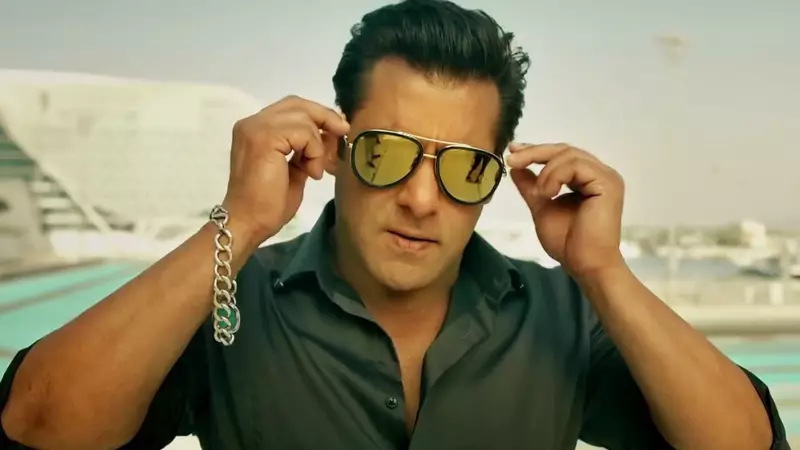
The real turning point came with Wanted (2009). More than just a hit, it marked the birth of “Bhai”, the larger-than-life action hero rooted in mass cinema. Salman reinvented himself completely, shedding romantic vulnerability for swagger, physical dominance, and moral absolutism. This wasn’t accidental. The late 2000s saw single-screen audiences craving straightforward, high-energy entertainers at a time when multiplex cinema catered more to urban sensibilities. Salman positioned himself as the undisputed king of the masses.
What followed from 2010 onwards is arguably the most dominant box-office run by any Hindi film actor. Dabangg (2010) established Chulbul Pandey as an iconic character, blending humour, action, and desi flamboyance. Salman was no longer just acting in films; he was selling an attitude. Films like Bodyguard, Ek Tha Tiger, Kick, Sultan, and Tiger Zinda Hai consistently crossed the ₹100 crore and later ₹300 crore marks, often irrespective of reviews. This phase proved a critical truth about his stardom: Salman Khan himself became the genre.
Unlike other stars whose box-office success depended on novelty or scripts, Salman’s films worked because audiences trusted the emotional contract he offered entertainment, heroism, and a sense of moral certainty. His presence guaranteed footfalls, especially in Tier-2 and Tier-3 cities. Economically, he became a distributor’s dream, with opening-day collections driven by fan loyalty rather than pre-release hype alone.
Parallelly, Salman’s evolution extended beyond cinema. Television amplified his reach exponentially. As the host of Bigg Boss, he entered Indian households weekly, strengthening his persona as a stern yet compassionate authority figure. This sustained visibility made his stardom multi-platform and intergenerational. Few actors have successfully balanced film superstardom with television dominance without diluting their cinematic aura—Salman did.
However, the late 2010s and early 2020s revealed cracks in the formula. Films like Race 3, Radhe, and Kisi Ka Bhai Kisi Ki Jaan exposed audience fatigue with repetitive narratives and declining novelty. The box-office no longer responded blindly, indicating that even the strongest stardom must evolve with time. Interestingly, Tiger 3 showed that Salman’s core fanbase remains intact, but the industry environment has changed—content, spectacle, and execution now matter more than ever.
What truly defines Salman Khan’s evolution is resilience. No other star has fallen as hard, faced as much public scrutiny, and yet returned to the top with such authority. His stardom is not built on critical acclaim or versatility alone but on emotional ownership by the masses. Salman represents familiarity, comfort, and aspiration, qualities that are rare and difficult to manufacture.
On his birthday, Salman Khan stands as a case study in Indian cinema history: a star who adapted to shifting audience psychology, survived industry upheavals, and redefined box-office metrics multiple times. His evolution is not linear; it is cyclical, marked by peaks, falls, reinvention, and dominance. Whether the future brings another transformation or a gradual transition, one thing is certain: Salman Khan is not just a superstar; he is an era.